Your neighbor is a gecko. How do you get along?
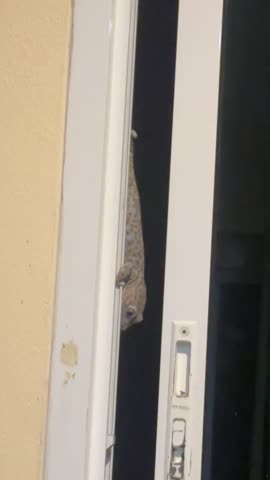
A pair of enormous tokay geckos lives in my bathroom. Male and female. Over the past three months, I first found four eggs, then another three. Meanwhile, the young geckos that hatched earlier are still living with their parents. It looks like they’ve set up a small family hostel at my place.

After sunset, the whole family crawls out to hunt. I run into them most often in the kitchen while I’m washing dishes. My sink is outside, so sometimes I have to share the workspace with a lizard the size of a small water bottle. We don’t get in each other’s way, though. I wash the dishes; they get on with their business.
 วิดีโอ: ทาง Telegram
And those aren’t my only neighbors. There’s also a whole crew of little house geckos running around. They live behind the furniture, hide in cracks, race across the ceiling and hunt insects. I have no idea how many there are. Sometimes it feels like the house belongs to them and I’m just the one paying the electricity bill.
Who are these geckos, anyway, and why do they like our houses so much?
Let’s start with the most common ones: the small greyish or translucent lizards you’ve probably seen in almost every house. They’re usually called house geckos. Several similar species live on Phangan, including Hemidactylus frenatus, the common house gecko.
These guys usually grow to around 8–15 centimeters including the tail. They prefer to hide during the day and come out to hunt in the evening.
You’ve probably noticed that geckos tend to gather around lights. It isn’t because they’re fond of lighting. Light attracts insects, and insects attract geckos. It makes for a very convenient restaurant: no need to go looking for food when you can just wait for it to fly in.
They eat flies, mosquitoes, small cockroaches, moths, spiders and other creatures. Of course, they won’t rid your home of insects completely. But at least some of the flies that get inside will end their lives in a gecko’s stomach. I’m perfectly fine with that.
Sometimes they make short clicking sounds. It isn’t random squeaking: geckos use sounds to communicate, defend their territory and find mates.
Tokays are a whole different story
Small house geckos look fairly harmless, but a tokay (Gekko gecko) is a serious lizard. These are the ones living in my bathroom. Large males can grow to 35–40 centimeters including the tail. They have massive heads, powerful jaws and bright spots on greyish-blue bodies.
The name “tokay” comes from their distinctive call. Males make extremely loud sounds that resemble “to-kay, to-kay!” Looking at the size of the animal, it’s hard to understand where all that volume comes from. Especially when one decides to have a chat in the middle of the night.
That’s how males attract females and stake their claim to a territory. If you’ve heard strange loud calls coming from the trees or under the roof in the evening, it may well have been a tokay.
But the most interesting thing I learned about these lizards has to do with their family life.
Tokays, it turns out, can form family groups. The parents guard their eggs and may continue protecting the young even after they hatch. Young geckos sometimes remain in their parents’ territory until they reach sexual maturity, at around 7–12 months. After that, they have to find a place of their own — without parents or loans, by the way.
That kind of behavior is fairly unusual for reptiles. Many lizards take almost no part in their offspring’s lives after laying their eggs, while tokays may care for theirs for months.
Their eggs are interesting too. A female usually lays two hard-shelled eggs at a time and attaches them to a surface. There may be several clutches in a season, and sometimes quite a lot of eggs build up in one place. So my seven eggs in three months may not be the limit. I hope they aren’t planning to take over the entire house.
What about the danger? Do tokays really bite?
Yes, and quite painfully. Despite their cute appearance, tokays can be very aggressive, especially if you try to catch them with your hands. The general rule applies here: if you’re not sure, don’t stick your hands in.
They aren’t venomous, but their jaws are strong. An adult tokay can bite through skin and latch onto a finger pretty firmly. So I wouldn’t recommend picking one up, trying to pet it or pulling it out of its hiding place.
On the other hand, if you leave the animal alone, it will usually prefer to mind its own business. If you encounter one, just give it a clear way out.
Geckos have another remarkable ability. They can easily run up vertical walls, across glass and even along ceilings — yes, even the chubby tokays. Their toes are covered in millions of microscopic hairs that let them cling to smooth surfaces through intermolecular forces. No glue, suction cups or magic involved.
And if you grab a gecko by the tail, it can drop it. The detached tail will keep wriggling for a while, distracting the predator as its owner escapes. A new one grows back later, though it usually looks different from the original. So it’s best not to touch geckos by the tail. I now have two tailless ones running around the house :|
Should you let geckos live in the house at all?
I don’t think you have much choice in Thailand anyway. You can seal the cracks, install screens and keep the windows closed, but sooner or later you’ll find a small lizard on the wall.
Personally, I don’t see this arrangement as much of a problem. Geckos catch insects, don’t damage furniture and usually try to avoid people. They do leave droppings sometimes, though, so surfaces — especially in the kitchen — need cleaning.
There’s one more problem: my cat. He does not share my friendly relations with the local wildlife at all. To him, a small gecko is an interesting moving toy that, if everything goes well, can also be eaten. I have to prevent those encounters whenever I can.
By the way, a study of Phangan’s lizards was published in 2025. Scientists surveyed 32 sites around the island and recorded 154 tokays. The researchers specifically noted that these lizards are much easier to spot on house walls or coconut palm trunks than high up in the forest canopy.
Speaking of which, I thought there were two gecko species on the island. In fact, there are 16 lizard species in total, seven of them belonging to the gecko family. Well, we all know two of them. Who else is there?
Flat-tailed house gecko. It looks very similar to the common house gecko, but its body and tail are flatter, with distinctive skin folds along the edges of its toes. It also settles near people and hunts insects. The study found it even in residential areas. It’s quite possible that some of the little house geckos in your home belong to this species.

Kuhl’s flying gecko. Probably the most interesting one on the list. It has broad folds of skin along the sides of its body and webbing between its toes. These allow it to glide from one tree to another. Its body also looks like a piece of bark, so even when it’s sitting on a tree trunk, it’s quite difficult to spot. Scientists found just three individuals in the forested part of Phangan National Park.

Chan-ard’s rock gecko. Unlike tokays and house geckos, this species is mainly active during the day. It lives among rocks and rocky areas in the forest and feeds on small invertebrates. The study found it in the forests of the national park and in some forest areas disturbed by human activity, but not in residential areas.

Short-fingered forest gecko. A forest species with brown camouflage coloring and a grasping tail that can curl up. It’s well adapted to life in trees. The Phangan study found only two individuals, both in the forested part of the national park.

Spotted bent-toed gecko. A beautiful forest gecko with a contrasting pattern resembling leopard stripes or spots. The markings are especially noticeable on its head and tail. It’s active at night and feeds on insects and other invertebrates. It was found in Phangan’s forest habitats.

So tokays aren’t exactly rare on Phangan. They’re just very good at hiding until you turn off the lights.
Do geckos live in your home? Have you ever come across a huge tokay?